technological convergence
What is technological convergence?
Technological convergence is a term that describes bringing previously unrelated technologies together, often in a single device. Smartphones might be the best possible example of such a convergence. Prior to the widespread adoption of smartphones, consumers generally relied on a collection of single-purpose devices. Some of these devices included telephones, wrist watches, digital cameras and global positioning system (GPS) navigators. Today, even low-end smartphones combine the functionality of all these separate devices, easily replacing them in a single device.
Why is technological convergence important?
From a consumer perspective, technological convergence is often synonymous with innovation. Technologies rarely converge in their current form. Improvements are often introduced as a part of the convergence. Consider the popularity of video cameras a generation ago. Today, consumer-grade video cameras are almost nonexistent. Most people record videos on their mobile devices. Although they can eliminate the need to carry a separate device -- a video camera, in this case -- they also deliver superior video quality as compared to what was once available. Video cameras from the early 2000s, usually, had a maximum resolution of 480i (720 x 480) and, often, experienced poor battery life. In contrast, a modern mobile device can record in 4K resolution. Additionally, their batteries can sometimes last for days, depending on how the device is being used.
Another reason why technological convergence is important from a consumer perspective is because it results in easier access to technology at a lower cost. This trend is sometimes referred to as the consumerization of information technology (IT).
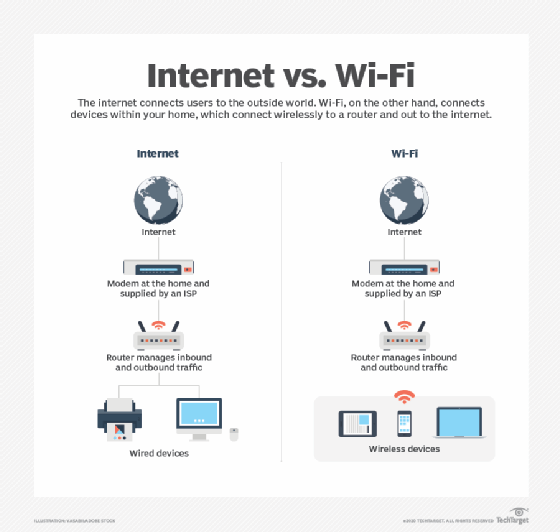
Wi-Fi is a perfect example of this. Wi-Fi was available in the late 1990s, but at the time a Wi-Fi router cost thousands of dollars and, typically, could only be set up by an IT pro. Today, Wi-Fi is ubiquitous. Nearly every consumer electronic device is Wi-Fi enabled. Additionally, prices are far lower than they once were, and Wi-Fi routers have been greatly simplified to the point that a non-tech-savvy person can set them up. Such benefits stem directly from technological convergence.
For businesses, technological convergence means companies are more easily able to connect to their customers and to learn more about customer's buying habits. In some cases, technological convergence even makes it possible for a business to influence a customer's purchases. Some retailers track customer's smartphone locations. If a customer is standing in a particular area of the store for a certain amount of time, the retailer might send the customer a coupon via text message or pop-up notification for the item they're looking at, thus, further enticing the customer to make a purchase.
Types of technological convergence
A good way to evaluate the importance of technological convergence is to consider innovations from previous generations. Items such as CD players, cassette decks, console TVs or corded telephones served only one function, whereas a single modern handheld computing device can meld several of those functions, with hardly any user intervention required.
People who aren't computer-literate are more likely to embrace the internet and video on demand if they can access these technologies through their television. TV is familiar and nonthreatening. Displays are large and TVs are easy to operate. Using them to access the web requires almost no training.
PCs, in spite of their graphical user interfaces, tend to be more text oriented. They are interactive, geared toward business and education uses, and their displays are smaller. Computers can be challenging for some and, often, require formal education or come with a personal learning curve.
Using a smartphone to make calls and take digital photos and using your digital TV to perform computing tasks, such as surfing the web while watching a movie, are two more examples of technological convergence.
Additional examples include:
- The internet of things (IoT)
- Converged Bluetooth-connected devices
- High-bandwidth Wi-Fi data networks to power intelligent sensors embedded in:
- Household appliances
- Automobiles
- Thermostats
The history and origin of technological convergence
Technological convergence is the result of disruptive innovation that combined the previously siloed fields of telecommunications, IT and media. This movement dates to an era before the prevalence of mobile wireless networks. At the time, telecommunication providers operated fixed telephone networks.
Mobile phones appeared in the 1990s as a convenient way to make phone calls on the go. More recently, smartphones that support various functions through a single interface emerged -- these functions could include gaming, listening to music, checking email or texting. In addition to multimedia, smart devices include GPS tracking, which supports location-based service for advertising in e-commerce.
Mainstream internet adoption fueled further convergence by telecom service providers. This led to the development of network convergence, or media convergence, which enables data, video and voice services to be delivered on a single network. Providers once limited to telephone services can offer bundled packages of cable TV, voice and internet access for a monthly rate.
Examples of technological convergence
Aside from telecommunications and media, technological convergence is starting to pervade other old-line industries. Initially, most newspapers and other print products had little to no internet presence. Over time, news outlets recognized the value of integrating new media to deliver real-time content and boost the reach of advertisers.
Converging technologies fueled the birth of social media applications for sharing content via an online platform. Almost every major media outlet has embraced a software development and IT operations (DevOps) approach to create branded applications, where users can interact directly with editorial staff and other subscribers via the publisher's Facebook page, Twitter handle or chatroom.
Electric vehicles also underscore the blurred lines between disparate technologies. Because they run on alternative fuels, these vehicles must tap into an interconnected electricity grid, while also interacting with internet technologies to analyze and transmit the data they collect.
Artificial intelligence (AI) is the simulation of human behavior by a computing device. Chatbots are software-driven tools designed with machine learning and natural language algorithms. Some companies use chatbots to handle service inquiries. For example, some online travel agencies use chatbots to help customers with requests such as canceling a reservation or changing their travel dates. The advantages to using this approach are that the customer receives immediate service without having to wait on an agent, and the travel agents are freed up to handle more pressing matters.
Although online travel agencies and other online businesses commonly integrate chatbots into their websites, there are other types of chatbots aside from the ones used for customer service. Virtual assistants, like Amazon's Alexa, Apple's Siri, Google Assistant and Microsoft's Cortana, are AI chatbots.
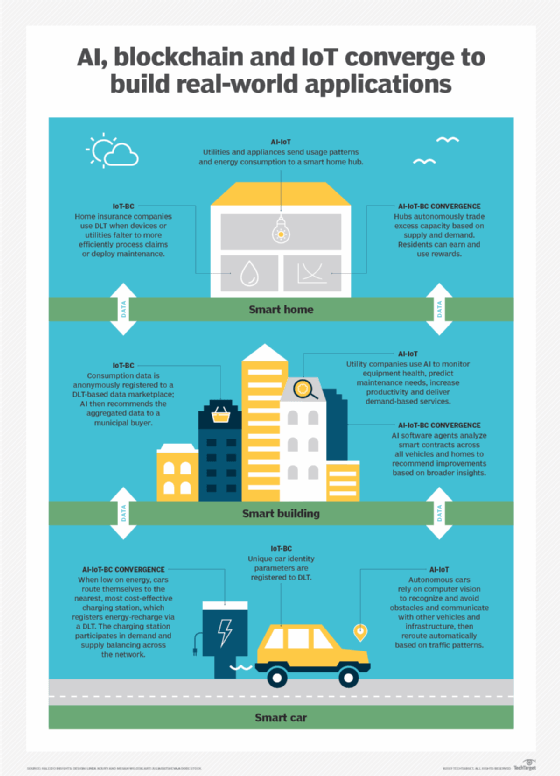
Another example of technological convergence is the way that AI, blockchain and IoT technologies are converging to enable a tamperproof ledger. Such ledgers are widely used in banking and cryptocurrency applications but also have other uses. Some data backup providers, for example, have adopted blockchain technology as a tool to make sure backups cannot be tampered with or encrypted by ransomware.
Technological convergence also enables the film industry to lower costs and add more interesting effects with digital production. On the other hand, digitized content is vulnerable to piracy through content ripping, and production houses might lose revenue as more viewers opt for video streaming in place of going to a movie theater.
Data centers increasingly are considering converged infrastructure (CI) or hyper-converged infrastructure (HCI). In CI, companies can buy compute, networking, server and storage components by the rack. HCI packages all the components on a single appliance.
What are the advantages of technological convergence?
There are several important advantages to technological convergence. It can spur innovation, while also reducing the need for single-use devices. Part of this innovation has to do with component miniaturization, as manufacturers must make electronic components smaller and smaller if they are to build evermore capable devices.
Technological convergence also helps consumers use devices in the way that best meets their needs. At one time, making a telephone call was the only option for speaking with someone far away. Today, a smartphone supports telephone calls, voice over Internet Protocol calls through messaging apps and video calls. Additionally, such devices enable communications through text messages, email and other text-based services.
Technological convergence can also help reduce costs. Purchasing internet, television and telephone service as a bundle is likely to be cheaper than subscribing to these services separately. Similarly, buying a smartphone costs less than purchasing a collection of single-purpose devices.
What are the disadvantages of converging technologies?
Despite its advantages, technological convergence comes with notable drawbacks. Due to the complexity of delivering internet, video and voice services, network providers must make necessary expensive investments in computing, networks, security and continuous software development. These costs are generally absorbed by consumers in the form of higher rates or service fees.
Additionally, converging services such as voice, video and internet can increase the severity of an outage. When these services were all separate, a telephone outage would only affect voice service. The same was also true for video and internet service. However, when these services are bundled together and delivered through a single connection, a service disruption can potentially lead to customers being without voice, video and internet for the duration of the outage.
Also, although they compete in a regulated industry, telecom service providers own the existing network infrastructure and might be reluctant to share it with rivals. This provides a barrier to entry for new companies to bring innovations to market. This situation has led to a debate over net neutrality rules in the U.S. that were enacted in 2015 to treat broadband services as a utility and prevent providers from giving preference to services they own over competing services. The Federal Communications Commission repealed the rules in 2018 after a series of legal challenges, although individual states are considering passing their own net neutrality laws.
From a user perspective, form factor plays a role in the efficiency of the converged technologies. Although you can open a browser on a smartphone, a mobile device might not be equipped to provide the same functionality as a desktop or PC due to the device's relatively small screen size. A physical device's form factor inevitably makes that device better suited to some use cases over others.
More importantly, given the pervasive nature of data collection enabled by converged technologies, it can be difficult for users to fully understand when data is being mined by technology companies and how it's being used to build a personal profile. Wearable devices, lapses in cybersecurity and the proliferation of mobile devices have increased the attack surface hackers can use to steal personally identifiable information. These concerns have sparked debate on the need for additional regulations in the U.S., similar to the General Data Protection Regulation laws that govern data privacy in European Union member countries.
Other security issues can also stem from digital convergence. Consumer-oriented IoT devices have long had a reputation for weak security. If an attacker were to successfully hack such a device, the attacker could potentially use the compromised device as a platform for attacking other devices that are connected to the same network. This can include data rich devices such as personal computers, tablets and smartphones.