virtual

What is virtual?
In computing, the term virtual refers to a digitally replicated version of something real, whether it's a machine, a switch, memory or even reality. It is distinguished from the real by the fact that it lacks an absolute, physical form. However, functionally it is no less real.
The replication, which is created with software, may not be an exact copy of the actual item, but it is similar enough in essence to be described as a digital rendition, and useful enough to support enterprise business needs.
What is virtual computing?
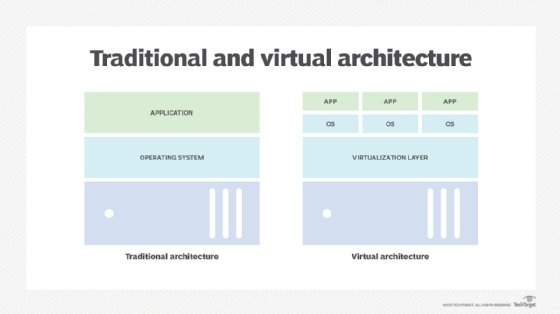
Virtual computing is the idea that one physical computer can act like many computers. It enables users to remotely access a computer from their local device. It also allows them to download and use more than one operating system, simultaneously perform multiple functions and get all the benefits of additional hardware and software without having to purchase or install them on their local system.
Users gain access to the remote computer via the internet through a wireless or network server, and log in via a specialized software. Once they log in, they can perform many tasks via their local device's keyboard, mouse or other tools.
Virtual computing is a real-time technology that enables users to remotely access:
Advantages of virtual computing
Virtualization is a paradigm in computing that is supported by the internet and numerous hardware and software solutions. It opens up many possibilities in IT and enterprise computing in terms of:
- remote access;
- increased storage space;
- data backup;
- greater choice of software applications;
- allocation and reallocation of input/output and other processes; and
- more options for performance monitoring, improvement and troubleshooting.
There are several benefits to using virtual computing. They are as follows:
- Workers can check company email on the go.
- Employees can work remotely from home, a cafe or nearly anywhere.
- Users can save or back up data and documents to a virtual server.
- Students can access courses and course materials remotely.
- Managers can access documents or data remotely.
Virtual computing helps expand the enterprise IT environment to users who are not in the same location as the resources they need to access. Allocating a computer's processes and resources to a virtual environment makes the system available for other processes and applications, which increases the overall efficiency of the system. It also frees up space on individual devices because users don't have to install, configure or store the assets they need as they can be accessed remotely and on-demand.
Virtual computing also improves the speed, accessibility and performance of IT operations and users. And resource-sharing through virtual computing eliminates the need to operate multiple computers and servers, which reduces cooling and power costs.
Applications of virtual computing
Virtual computing plays a crucial role in modern-day information technology (IT) architectures. It has a number of real-world applications, including:
- Virtual Reality (VR). VR is an artificial environment that offers immersive audio and visual experiences to users. These experiences are usually presented through specialized equipment. While the experience is fairly realistic, the users' physical reality does not exhibit any change.
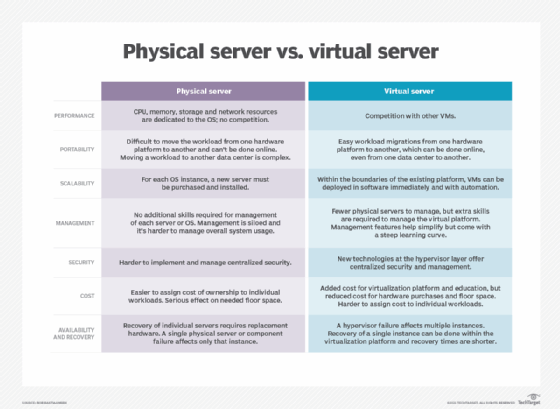
- Hardware virtualization. Hardware virtualization is the creation of a software version of a physical device. It can also involve bringing multiple hardware pieces together across geographical distances.
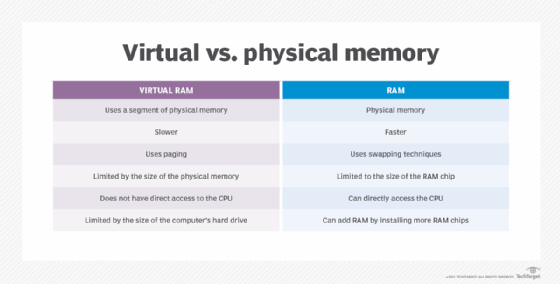
- Virtual memory. It refers to a nonphysical set of memory addresses or locations that are treated as physical memory when a program or application is executed. It allows a computer to compensate for physical memory shortages by temporarily transferring data from the device RAM to disk storage.
- Virtual assistant. A virtual assistant is a program or device that understands human languages to some extent, and performs tasks based on the spoken requests or requirements. Amazon's Alexa and Apple's Siri are examples of popular virtual assistants.
- Virtual agent. A virtual agent is an automated chatbot or voicebot that provides customer service without the need for human intervention.
- Virtual machine (VM). A VM is an OS or application environment that displays the characteristics of dedicated hardware in a virtual environment.
- Virtual switch. A virtual switch is a software program that manages network traffic and allows communication between VMs.
- Virtual tape. A virtual tape is a storage technology application that makes a drive-based storage system look like a tape library.
- Virtual world. A virtual world is a simulated, computer-based environment where users can create personal avatars, participate in virtual activities and communicate with other users over the internet through voice or chat.
Does virtual mean it's not real?
Just because something is virtual doesn't make it any less real. Virtual is more about the environment where online activities take place, rather than the activities themselves.
For instance, a virtual trade show refers to an event that takes place in a computer-based virtual venue rather than in a physical venue. The event lacks a physical form, but it is no less real than any regular event held in the "real" world.
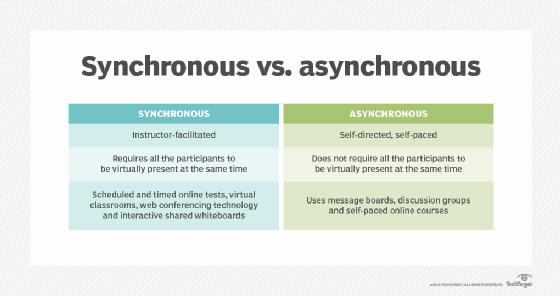
Similarly, virtual learning enables students to remotely access learning resources in a virtual environment. They can view videos, communicate with other students and even participate in live lectures from their local device. Thus, they learn in a "virtual classroom," which doesn't have a physical form, but still exists for all practical purposes.
Learn the types of virtualization IT admins should know, the history of virtualization and its mark on data center management and the key differences between full virtualization and paravirtualization. Also, explore common virtualization problems and how to solve them, virtual server management best practices and the benefits of containers on bare metal versus on VMs.