International System of Units (SI)

What is the International System of Units (SI)?
The International System of Units is a global standard for expressing the magnitudes or quantities of important natural phenomena. Also referred to as the metric system, the System of Units is commonly abbreviated as SI, which comes from the original French name, Système international d'unités. The SI standard builds on an earlier system of measurement called the meter-kilogram-second (MKS) system.
The Bureau international des poids et mesures (BIPM) is responsible for promoting and describing the SI standard. Known as the International Bureau of Weights and Measures in English, the organization was established in 1875 and operates under the supervision of the International Committee for Weights and Measures (CIPM). The CIPM comes under the authority of the Conférence générale des poids et mesures (CGPM), also known as the General Conference on Weights and Measures.
At the heart of the SI standard is a set of seven defining constraints that serve as a foundation for all units of measurement specified in the SI standard.
- The hyperfine transition frequency of the caesium-133 atom (∆νCs) is 9,192,631,770 hertz (Hz).
- The speed of light in a vacuum (c) is 299,792,458 meters per second (m/s).
- The Planck constant (h) is 6.62607015 × 10⁻³⁴ Joule seconds (J s).
- The elementary charge (e) is 1.602176634 × 10⁻¹⁹ coulombs (C).
- The Boltzmann constant (k) is 1.380649 × 10⁻²³ Joules/Kelvin (J/K).
- The Avogadro constant (NA) is 6.02214076 x 10²³ particles per mole (mol−1).
- The luminous efficacy of monochromatic radiation of frequency 540 × 1012 Hz (Kcd) is 683 lumens per watt (lm/W).
According to SI documentation, the constants provide a "fundamental, stable and universal reference that simultaneously allows for practical realizations with the smallest uncertainties." All units identified in the SI standard can be derived from these seven constants.
International System of Units (SI) base units
Prior to 2018, seven base units provided the foundation for the SI standard. In addition, the standard defined multiple derived units. However, the standard now builds on its seven constants, and all defined units are derived from those constants. That said, the standard retained the concept of seven base units, along with the additional units derived from the base units.
All SI units can be expressed in terms of standard multiple or fractional quantities, as well as directly. Multiple and fractional SI units are defined by prefix multipliers and powers of 10 ranging from 10-24 to 1024. The seven base units are defined as follows:
- Meter (m). Unit of length. One meter is the distance traveled by light through a vacuum in 1/299,792,458 (3.33564095 x 10⁻⁹) of a second. The meter was originally defined as one ten-millionth (0.0000001 or 10-7) of the distance around the earth's surface, as measured in a great circle passing through Paris, France, from the geographic north pole to the equator.
- Kilogram (kg). Unit of mass. The value of the kilogram is now based on the Planck constant, which is 6.62607015 × 10⁻³⁴ J s. Prior to 2018, the kilogram was defined as the mass of a specific international prototype made of platinum-iridium and kept at BIPM headquarters. Before that, the kilogram was defined as the mass of one liter (10-3 cubic meters) of pure water.
- Second (s). Unit of time. One second is the time that elapses during 9.192631770 periods of the radiation produced by the transition between two hyperfine levels of the Cesium-133 atom in an unperturbed ground state. It is also the time required for light to travel 299,792,458 (2.99792458 x 10⁸) meters through a vacuum.
- Kelvin (K). Unit of thermodynamic Temperature. The value of the Kelvin is now based on the Boltzmann constant, which is 1.380649 × 10⁻²³ J/K-1. Prior to 2018, a Kelvin was considered equal to 1/273.16 (3.6609 x 10⁻³) of the thermodynamic temperature of the triple point of pure water (H2O).
- Ampere (A) Unit of electric current. The value of the ampere is now based on the elementary charge, which is 1/1.602176634 × 10-19 times the elementary charge e per second. Prior to 2018, the ampere was based on the force between two current carrying conductors that fixed the value of vacuum magnetic permeability at 4π × 10−7 H m−1.
- Candela (cd). Unit of luminous intensity. The value of the candela is now based on the luminous efficacy of monochromatic radiation of frequency 540 × 1014 Hz, which is 683 lm/W. Prior to 2018, the candela was the measure of electromagnetic radiation, in a specified direction, that had an intensity of 1/683 (1.46 x 10⁻³) watt per steradian at a frequency of 540 terahertz (5.40 x 10¹⁴ hertz).
- Mole (mol). Unit of an amount of substance. The value of the mole is based on the Avogadro constant, which is 6.02214076 x 10²³ mol−1. One mole has exactly 6.022169 x 10²³ elementary entities.
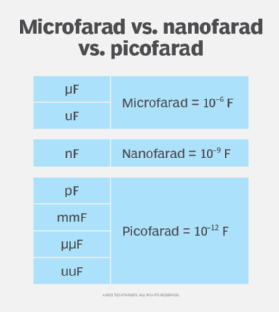
The SI standard also includes units derived from the base units. The derived units are defined as products of powers of the base units. For example, one derived unit is the newton, which can be expressed in terms of base units as 1 kg m/s2. Other derived units include the hertz, the pascal (unit of pressure or stress), the ohm, the farad, the joule, the coulomb, the tesla, the lumen, the becquerel, the siemens, the volt and the watt.
These units are included in our Table of Physical Units.